
Behind the Scenes by John Miller – January 2025
“Did I tell you what happened at the play? We were at the back of the theater, standing there in the dark, all of a sudden I feel one of ’em tug my sleeve, whispers, “Trudy, look.” I said, “Yeah, goose bumps. You definitely got goose bumps. You really like the play that much?” They said it wasn’t the play gave ’em goose bumps, it was the audience.
I forgot to tell ’em to watch the play; they’d been watching the audience! Yeah, to see a group of strangers sitting together in the dark, laughing and crying about the same things…that just knocked ’em out.”
– Jane Wagner & Lily Tomlin, The Search for Intelligent Life in the Universe
Throughout the years as I sit in my little spot in the tech booth I’ve seen some amazing shows! But I often find myself watching the audience. Student Matinees are the best, whether they are laughing at Pete the Cat or screaming when the T-Rex lumbers on stage! Adult audiences are different, sometimes it’s just the silence you feel as they are absorbed by an emotional moment on stage. Sometimes it’s an audience of parents each with a cell phone out recording their child’s Christmas program.
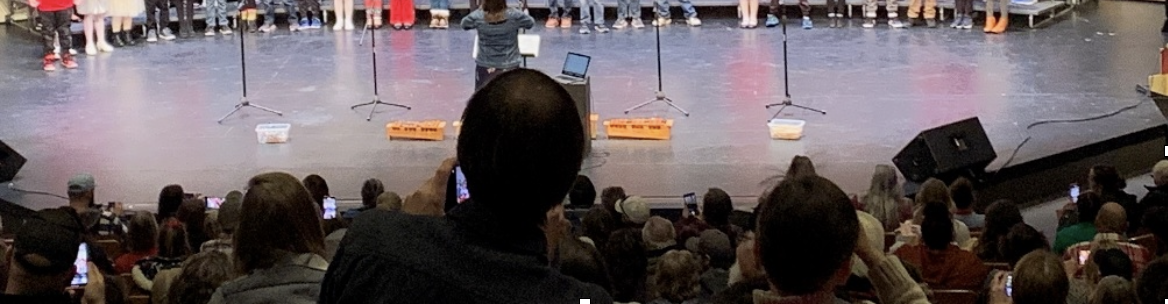
Attending live theater is a shared social experience that entertains us. Live theater also creates connections and a deeper understanding of other people’s experiences. Theater, at its heart, is storytelling. During the 2020 pandemic Singer/Storyteller Michael Laughing Fox Charette set out to share 20,000 years of Anishinaabe culture through “heartfelt stories that have guided our people for countless generations.”
Approached by Lake Superior Big Top Chautauqua to create a show about the local indigenous culture Charette approached dozens of his fellow artists to share the culture and history of the Anishinaabe people. Anishinaabe Dibaajimowin: An Ojibwe Story brings together storytelling, music, dance and artwork in what Winona Laduke calls, “One of the most extraordinary plays I have seen. The play lifted hearts and stories in a time of immense change and uncertainty in our world.”
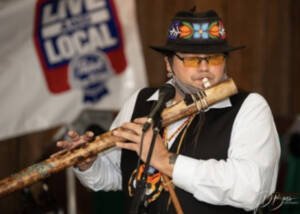
Storytelling is the traditional means by which the Ojibwe have passed their stories and tribal history down through the generations. Charette makes use of age-old and modern techniques to tell diverse stories of Creation and the Flood, land treaties, and Indian boarding schools. Many stories use song, such as the true name of the Apostle Islands, Wenabozho ominisan, which translates to “the islands of Wenabozho”. No two performances of An Ojibwe Story are alike, as the storytellers and the stories often change.
Music is an integral part of Ojibwe culture, and An Objibwe Story makes use of traditional Ojibwe instruments; flute, drums and rattles, providing underscoring and accompanying singers and dancers. Chartte co-wrote the non-traditional music for the production with Severin Behnen, musical director of Lake Superior Big Top Chautauqua. They are long time collaborators and last year released the album “Butterfly Moon”, which has received a nomination by the Native American Music Awards. The musical score for An Ojibwe Story makes use of music from the album.
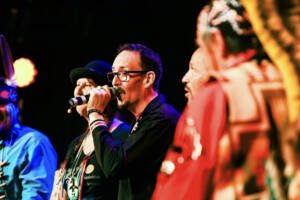
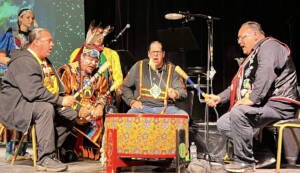
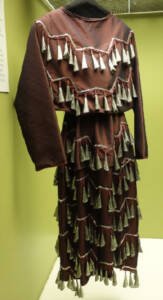
An Ojibwe Story travels with traditional dancers, but also invites local dancers to join the production at each of its performances. While todays audiences are more familiar with stories told through ballet, tap or jazz dancing, Ojibwe traditional dance is a rich source of storytelling. One example is the Jingle Dress dance. Originating during the influenza pandemic of 1918, the dance tells the story of a sick girl healed by dancing in a dress covered in silver cones. One tradition says that the girl’s grandfather, an Ojibwe medicine man, dreamed of the dance, dress and music before teaching his granddaughter the dance.
The most theatrical and modern of the storytelling devices in An Ojibwe Story is the use of projections, including photos, artwork, film and live interviews. Many of the images were created by Rabbett Before Horses Strickland, often called “The Michelangelo of the Ojibwe.” He combines his study in European Renaissance and Baroque masters with subject matter deeply rooted in Anishinaabe culture. According to his website Strickland has dreams of his painting which, “feature moments from Ojibwe stories…there are lessons in the stories, and thus lessons in Strickland’s paintings.”
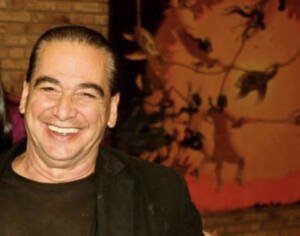
Perhaps, most importantly, An Ojibwe Story is about the healing nature of telling ones story. As Winona Laduke described in her review, the audience could sense and understand the healing, spiritual nature of the performance. As quoted in her review Martin Curry says, “It was pretty healing for me, there were several times when I teared up… when I cried, and it felt right… Native men, we have to be different things to different people, it’s kind of like acting. That’s where identity, and the identity of these stories, is so profound. You are a storyteller. You are someone who cries, who is angry… You can be all of these things and it’s acceptable. That’s the great thing about theater.”
From everything I’ve seen and read about Anishinaabe Dibaajimowin: An Ojibwe Story be prepared for a moving and entertaining evening of storytelling through voice, music, dance and artwork. And, just maybe, get a seat in the back with me and watch the audience!
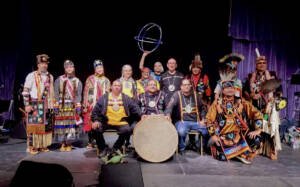
[Editor’s note: This article was written by John Miller, Technical Director at the Reif Performing Arts Center in Grand Rapids. It is part of a series of monthly articles titled “Behind the Scenes”. The article on their website includes many additional photos. All of his articles are available on the Reif Center’s website at https://www.reifcenter.org/reif-behind-the-scenes/. MACT would like to thank John and the Reif Center for allowing us to reprint this article. The Reif Center will be the location of MACT*Fest 2027.]