 MACT
MACT
Behind the Scenes by John Miller – February 2025
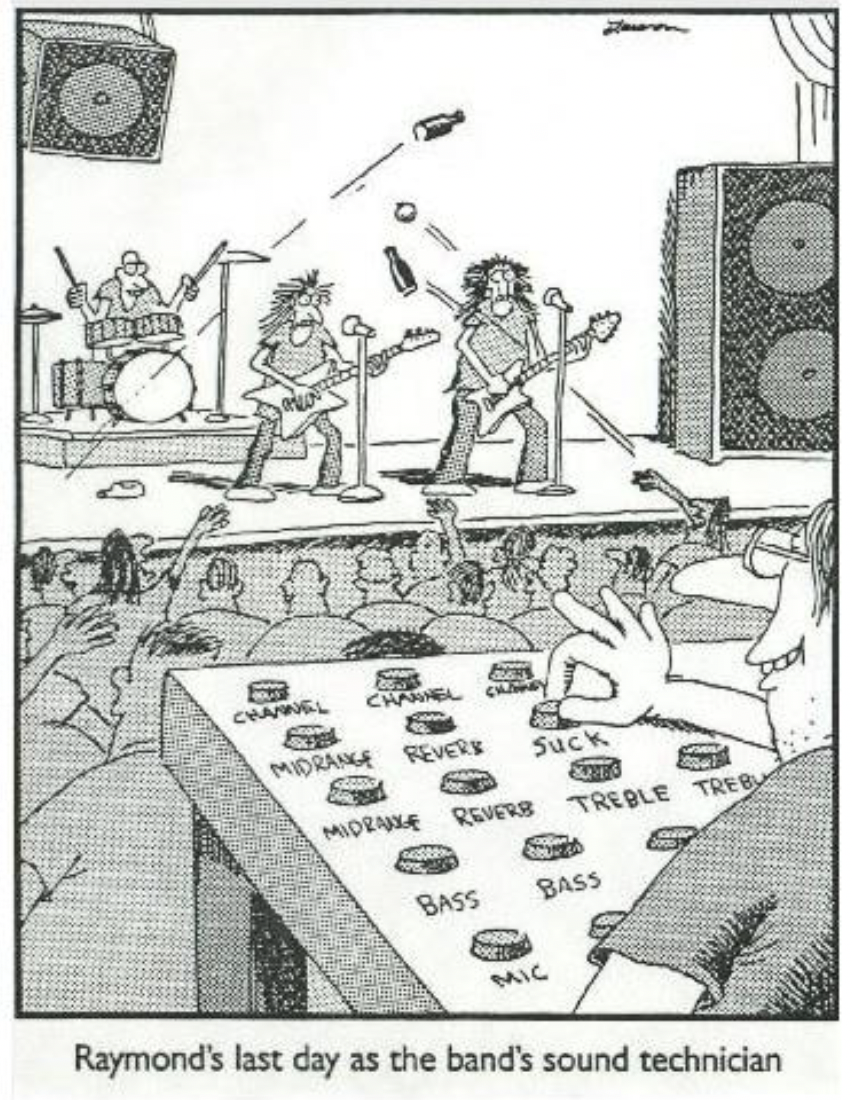
It’s been said that “Everyone knows how to do two jobs, their own and sound.” OK, it was me, I said that! But it’s true! I’ve never had anyone come back to me at the light board and complain that they can’t see the actors, but audience members give themselves permission to tell the sound person when they don’t like the volume, the mix or when they can’t understand the lyrics. It’s not that I can’t take constructive criticism, but most of the time the problem they bring up is either out of my control, or so overly broad that it’s not helpful. The other thing I hate about sound is the difficulty in troubleshooting a problem. There are so many components to an audio system, is it the speakers, a bad cable or some obscure setting on your soundboard? Pinpointing the exact source takes a methodical approach, checking every device, connection and setting.
Then there is dealing with musicians, normally a lovely group of human beings. But, from time to time, you may get one that is harder to work with. I understand that their sound is a critical element of their performance, but if it’s that important you should travel with your own system and sound engineer! If you decide to save money by using the house system and engineer, then cut them a little slack. I’ve probably never heard your music before!
I began my career as a theater electrician and lighting designer, and it’s still the part of the job I like the most. Problems with lighting fixtures are usually simple to identify. Most often it’s a burnt out lamp or a loose connection in the plug, something simple that’s easily seen and fixed. Running sound for shows was part of the job when I started here, so I jumped in. I’m glad I don’t have any memories of those early shows, I’d listen to them now and be horrified! But you learn by doing, an ongoing process for me—even now.
The most common complaint about live sound is, “It’s too loud!” Let’s look at why the volume would be too loud.
- It’s a loud band! Drums and amplifiers can create and excessive “stage volume” which the sound person can’t reduce. I have no control over how hard the drummer hits the drums, or when the guitarist turns his amp up to 11. There are shows where I can mute the microphones on the drums and amps and they are still too loud. This drives me to push up the vocals so they can be heard over the instruments. One year we had this gospel group, sounds nice and mellow? Well, we had to rent $2,000 dollars of backline equipment for them, a drum kit, guitar amps, a keyboard and an organ! It was more like a rock band, and when I boosted their vocals, it did get pretty loud. Got a few complaints and walkouts on that one (sigh).
- When the band doesn’t adjust to the venue. Some national acts that come here are used to playing bigger theaters, arenas or outdoor venues. Even the 700-seat Wilcox might be a little small to them, but they keep playing like it’s a 2500-seat arena! We’ve also had bands in the 200 seat Ives that probably should have been in the Wilcox. The Ives is a great venue for acoustical acts with minimal miking and amplification. When a band has a lot of sound coming from their amps and drums the acoustics of the concrete block structure of the Ives naturally amplifies it even more!
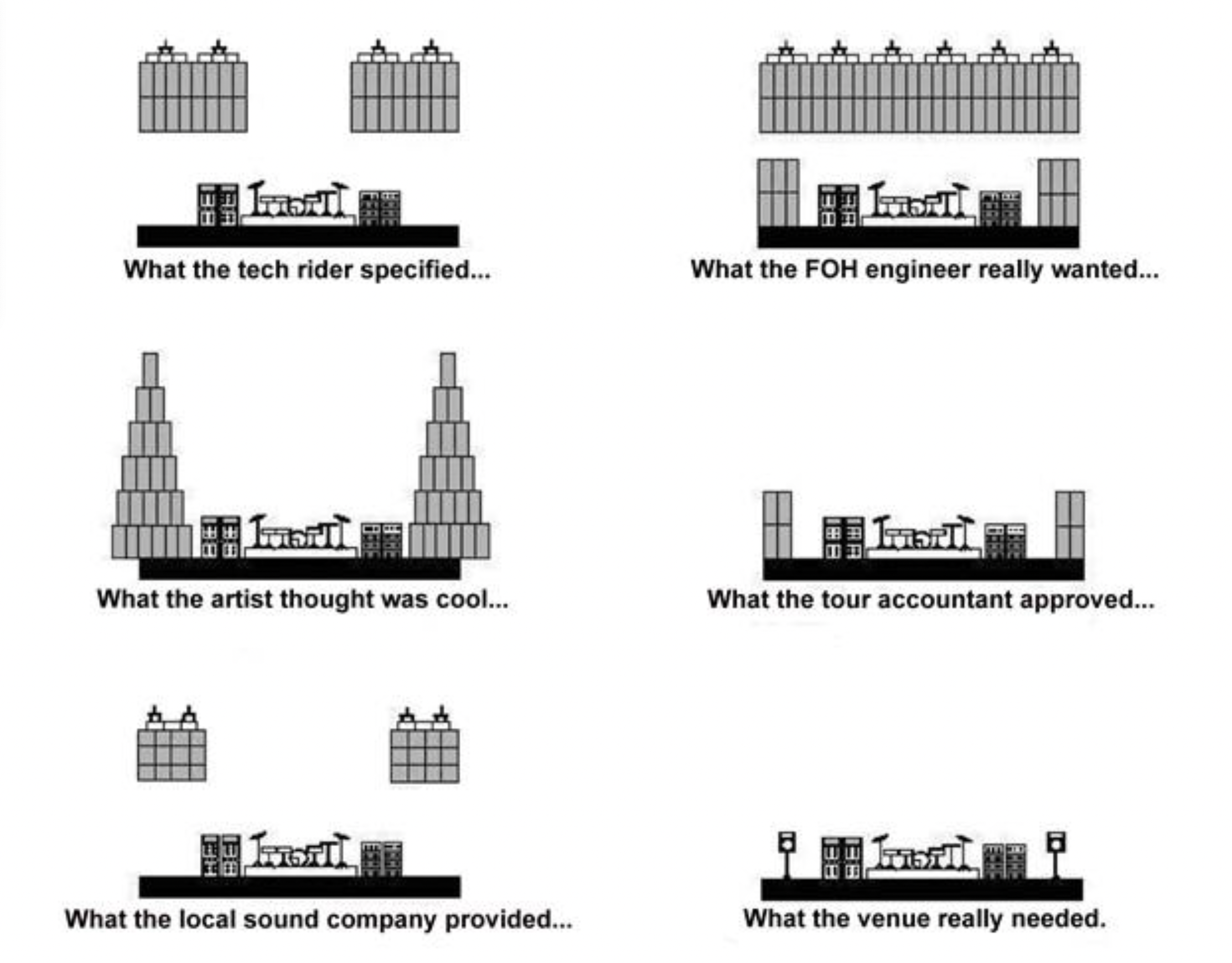
- You are sitting right in front of a speaker. We had bands that come in with a “ground stack” of speakers instead of using our house speakers that are flown above. Sitting in front of those speakers? It’s gonna be loud! I feel sorry for one of our Reif board members who uses a wheelchair. Seem’s like she’s always getting stuck right in front of one of those ground stacks!
- The sound person is deaf.
Another common complaint is about the mix, the comparative volume of guitar to the vocals and so on, “I can’t hear the guitar, turn them up!” Sometimes they are right, and I do! Especially if it’s coming from a friend or family member of the band that is more familiar with their music than I am. Other times I may not, during sound check a band member will usually come listen to the mix for the house. I don’t want to change what the band sets without a pretty good reason.
Sometimes you may get this, “It just sounds horrible!” A sound system is like a computer – garbage in, garbage out. If the lead vocalist is tone deaf or the guitar is out of tune, nothing I can do will make that sound better! Once in the Ives, we had one of those indeterminate “indie” bands. I couldn’t tell if they were making those sounds on purpose or if something had gone drastically wrong with their equipment, or mine! That was a long night.
Phew, I feel like I’ve been venting, but it’s been therapeutic! I’ll leave you with a couple of snappy comebacks I’ve come up with.
“Don’t you think it’s too loud?” “I’m sorry, I can’t hear you, this band is really #@*% loud!”
“Doesn’t it sound terrible?” “Yes, I agree! At least I’m being paid to listen to them!”
So, give me a break, or I’ll use one of these on you!
[Editor’s note: This article was written by John Miller, Technical Director at the Reif Performing Arts Center in Grand Rapids. It is part of a series of monthly articles titled “Behind the Scenes”. All of his articles are available on the Reif Center’s website at https://www.reifcenter.org/reif-behind-the-scenes/. MACT would like to thank John and the Reif Center for allowing us to reprint this article. The Reif Center will be the location of MACT*Fest 2027.]